
How Do You Start Beading? A Beginner’s First Steps
If you’ve ever looked at beaded jewelry and thought, “I’d love to try this, but I don’t even know where to begin,” you’re in good company.
Beading has a way of looking complicated from the outside. Charts, stitches, bead sizes, thread types—it can feel like a lot before you ever pick up a needle. But the truth is, beading starts much more simply than most people expect.
You don’t need a big supply list.
You don’t need to be artistic.
And you definitely don’t need to get it right the first time.
Start Small (Really Small)
One of the fastest ways to get overwhelmed with beading is trying to learn everything at once.
Instead, start with:
- one stitch
- one small practice piece
- one bead size
That’s enough.
At the beginning, you’re not making “finished jewelry.” You’re learning how beads sit next to each other, how thread feels in your hands, and what happens when you pull too tight (we’ve all done it).
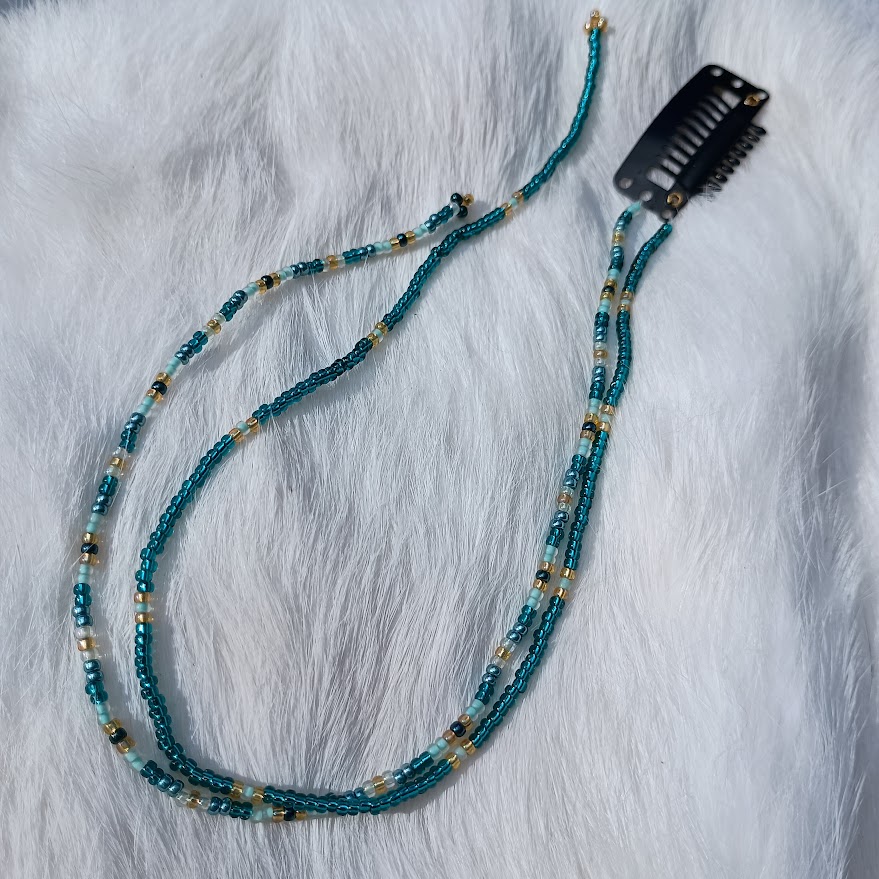
Simple stringing projects like this are a great way to begin beading before moving into stitched designs. This piece below is for a simple beaded clip. I used wig clips and size 11/0 beads. But you could mix and match sizes for something like this.
Choose a Simple First Project
Your first project doesn’t need to be wearable.
A flat strip of brick stitch.
A small practice swatch.
A simple earring shape you don’t care if you keep.
All of those count. The goal isn’t perfection—it’s familiarity.
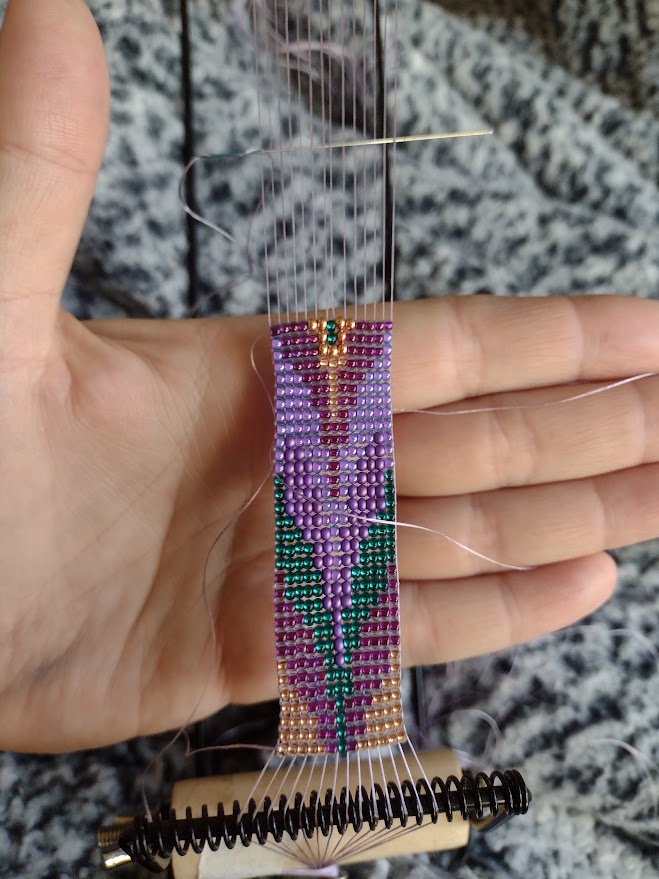
Another idea for beginning your beading journey is to start on a simple loom. You can create patterns and even start with just a few colors.
What You Actually Need to Get Started
You’ll see long lists online. Ignore them for now.
To begin, you only need:
- seed beads (8/0 or even 6/0 are a great place to start since they are quite a bit bigger bigger)
- beading thread (I use Beadsmith Fireline or KO Japanese Nylon Beading Thread)
- a beading needle (I use Beadsmith ColorEYES Beading Needles, Size 11)
- scissors
That’s it. You can always add more later, once you know what you enjoy working with.
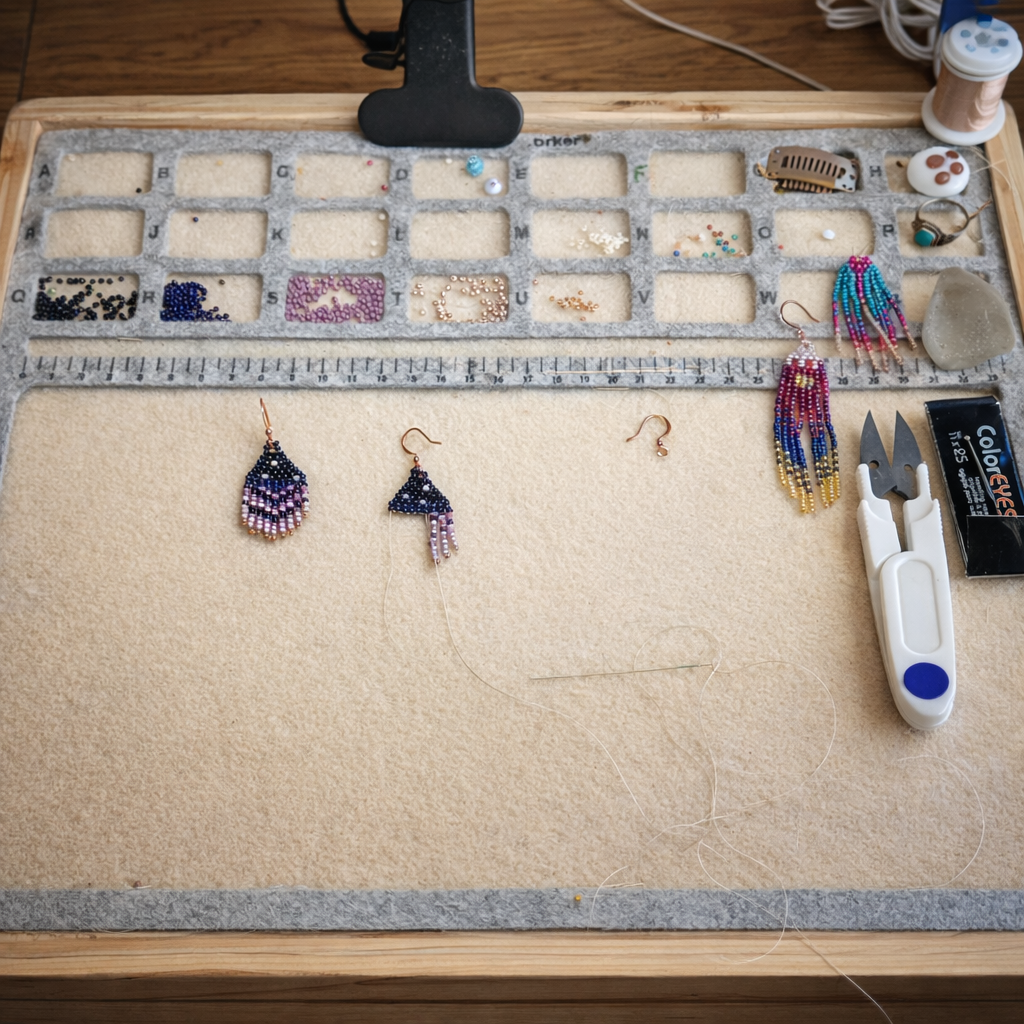
This is my work shop. I am able to bead while sitting on the couch or even in a chair. I have taken my tray with me places. That black thing at the top middle, is my clip on light. It is connected to a USB port.
A Few Things Beginners Always Run Into
If any of this happens, you’re doing it right:
- your thread feels tangled
- your beadwork curls
- your stitches look uneven
This is normal. Beading is learned through your hands, not by reading about it. Every piece teaches you something, even the ones you don’t keep. Back when I started beading, there was no internet. I first started my beading journey by looking at the Woodstock Craftsman Manual.
Starting Beading Isn’t About Talent
It’s about slowing down.
It’s about repetition.
It’s about letting your hands learn at their own pace.
Everyone starts awkwardly. Everyone drops beads. Everyone has a first piece they laugh about later.
That’s part of the process. I still drop beads even now. I still screw up and I still sometimes have to cut it all apart and start over. It is ok, it happens.
About Patterns and Planning
A lot of beginners get stuck before they even start because patterns feel intimidating. Visual planning tools can help by letting you see a design before you bead it, but that’s something you can grow into.
For now, focus on learning the stitch. Everything else can wait.
Start Where You Are
Beading doesn’t require perfection or speed. It just asks that you begin.
One stitch.
One row.
One small step at a time.
That’s how everyone starts.