What Beads Should Beginners Use?
When you are new to beading, choosing beads can feel overwhelming very quickly. There are different sizes, shapes, finishes, materials, and brands, often all mixed together in the same place.
If you are standing there wondering where to start, here is the most important thing to know. You do not need many options to begin. You just need the right starting point for you.
Start With Seed Beads
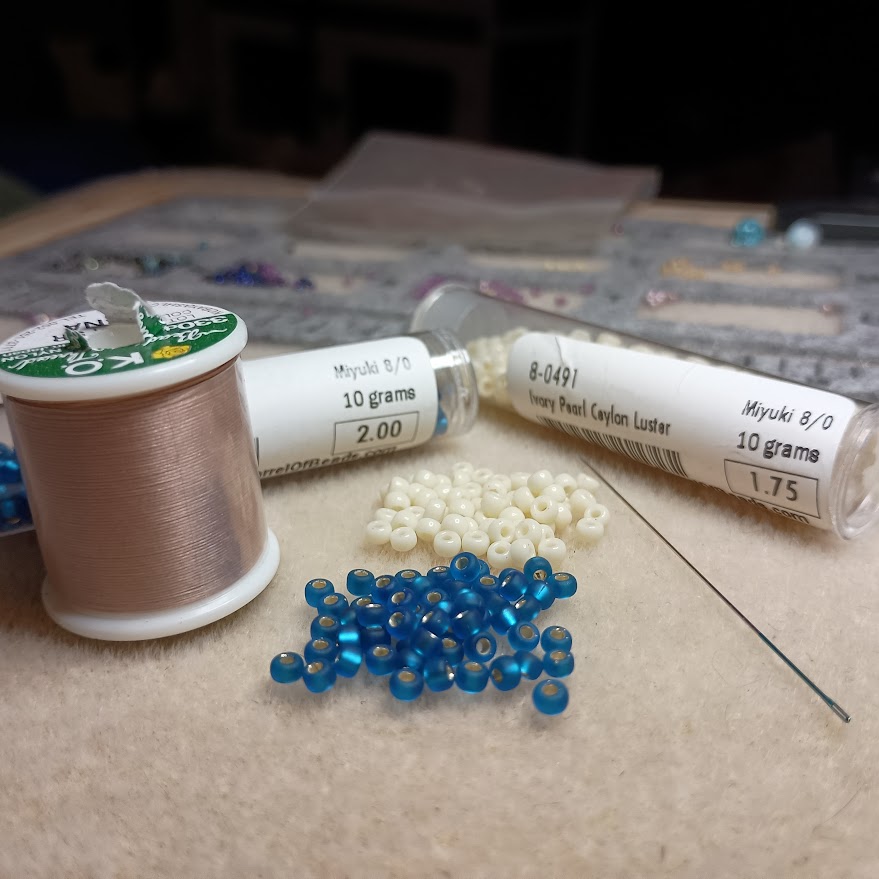
For most beginners, seed beads are the easiest place to start.
Seed beads are small, fairly uniform beads used in many bead weaving techniques, including brick stitch, peyote stitch, fringe, and other traditional styles. Most beginner tutorials and patterns are written with seed beads in mind, which makes learning far less frustrating.
They are commonly used not because they are trendy, but because they work.
Which Bead Size Should Beginners Start With?
There is not just one correct answer here. Two sizes tend to work well for beginners, depending on what feels most comfortable.
If you are brand new to beading, 8/0 seed beads can be a very gentle place to start. They are larger, easier to see, and easier to handle while your hands are learning how stitches work. Many people find them less tiring on the eyes and fingers at first.
Once beading starts to feel familiar, many people naturally move into 11/0 seed beads. This is the most commonly used size in patterns and tutorials and allows for more detail while still being very versatile.
Some beginners start directly with 11/0 and do just fine. Others prefer beginning with 8/0 and transitioning later. What matters most is choosing a size that makes learning feel approachable, not frustrating.
Seed Beads and Delicas
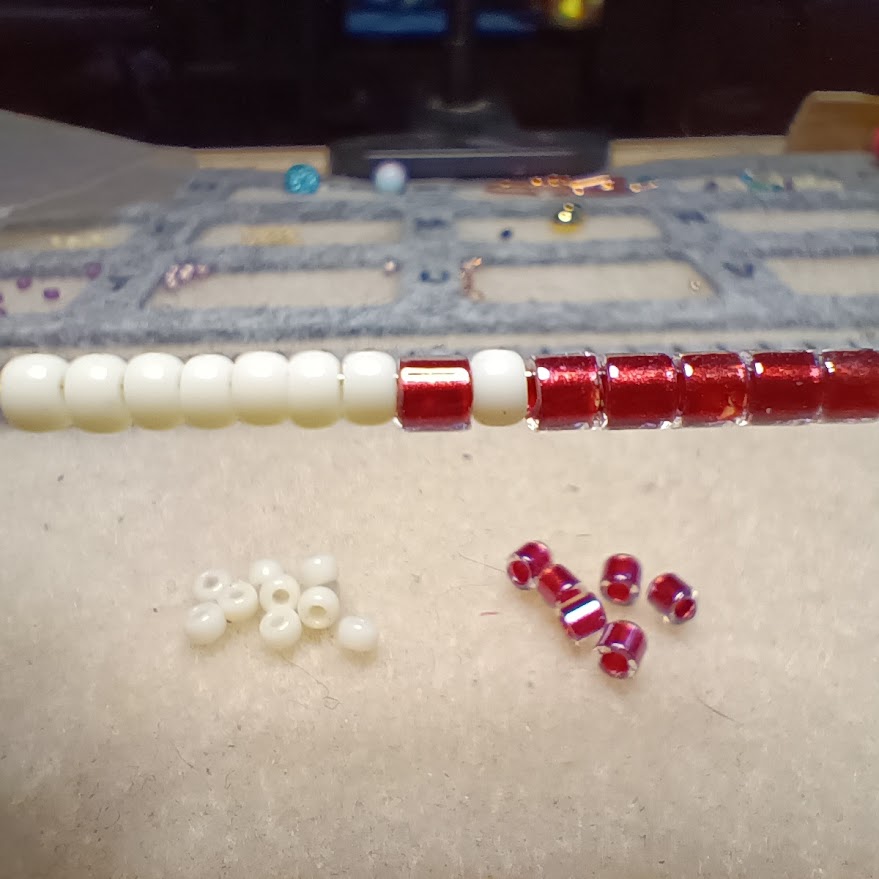
You may also hear people talk about Delica beads, which are a type of cylinder bead. Delicas are extremely uniform and create very clean, straight lines in finished work.
I personally work mostly with traditional seed beads, which have a slightly rounded shape and a more organic feel. Many beaders prefer Delicas, especially for designs that are very geometric or precise.
If you are just starting out, you do not need to decide between them yet. Both are widely used and respected. The focus early on is learning how stitches work and how beads behave in your hands.
Glass Beads Versus Plastic Beads
When it comes to bead weaving, glass beads are almost always the better choice, especially if you ever think you might sell your work.
Glass seed beads tend to be more consistent in size and shape, which helps beadwork sit flatter and look more polished. The holes are usually smoother and more reliable, which makes stitching easier and reduces wear on your thread over time.
Plastic beads are lighter and often less uniform. That unevenness can make learning stitches more frustrating than it needs to be, and finished work usually does not have the same weight or feel.
Plastic beads can still be useful for practice pieces, learning stitch movement, and low-pressure experimentation. However, if you plan to give your work as a gift or eventually sell it, glass beads are the better investment. They hold up better, feel more substantial, and are generally what buyers expect when purchasing beaded jewelry.
A simple rule to remember is this. Practice with anything, but create finished pieces with materials you are proud to stand behind.
A Personal Note From My Own Beginning
When I first started beading many years ago, I did not begin with seed beads at all.
I used to buy mixed-color glass beads in bulk, fairly large beads that were likely around a size 8. They were easy to handle and fun to experiment with, but they were not really suited for the kind of jewelry I was drawn to making. At the time, though, I did not know that. I was simply learning by doing.
There were no online tutorials back then. No videos. No step-by-step guides. The only real references available to me were books, many of them focused on Native American jewelry.
My stepfather comes from a long lineage of Native American heritage on both his mother’s and father’s sides, including Osage and Choctaw, Cherokee, and Nez Perce from the Umatilla Reservation. Beadwork was something I grew up around, observed closely, and learned to respect deeply.
We attended pow wows, watched skilled beadworkers work with incredible precision, and learned by seeing, by being present, rather than by instruction. For a period of time, we made Native American–inspired jewelry together and sold it at craft shows throughout California, Oregon, and Nevada.
Eventually, I moved on to size 15 seed beads. I filled small camera film canisters with them, every color I could find. I still have many of those beads today.
Now, years later, working almost exclusively with size 11 seed beads, I can see just how incredibly tiny size 15 really is. What once felt manageable now feels delicate and exacting. That perspective only comes with time.
How Many Beads Do You Need?
A lot of beginners worry about running out of beads before they even start, but you usually need far fewer than you think.
In a 13-gram tube of seed beads, there are roughly 110 beads per gram, which means one tube holds well over a thousand beads.
To put that into real terms, one earring can use anywhere from 100 to 300 beads depending on the pattern and size. A full pair of earrings may use between 200 and 600 beads total. Practice pieces and small swatches use even fewer.
Even a single tube is plenty for learning, experimenting, and completing finished projects. There is no need to stockpile colors right away.
A Simple Beginner Rule
If you are unsure what to buy, remember this. Choose beads that make learning easier, not more impressive.
Skill comes first. Everything else follows.
Start Where You Are
One bead type, one bead size, one small project. That is more than enough to begin.