
Beading Basics: A Simple Introduction to Beading
Beading is the art of creating designs, jewelry, and decorative objects by stitching, weaving, or threading beads together. It’s one of the oldest forms of human adornment and storytelling—and today, it’s also a creative hobby enjoyed by people of all ages, from absolute beginners to skilled artisans.
At its heart, beading is about building something beautiful one bead at a time.
A Brief Look at Beading Through History
Beads have been used for thousands of years across cultures and continents. Archaeological finds show beads made from shells, stones, bones, glass, and metals, often used to signify identity, status, protection, or spirituality.
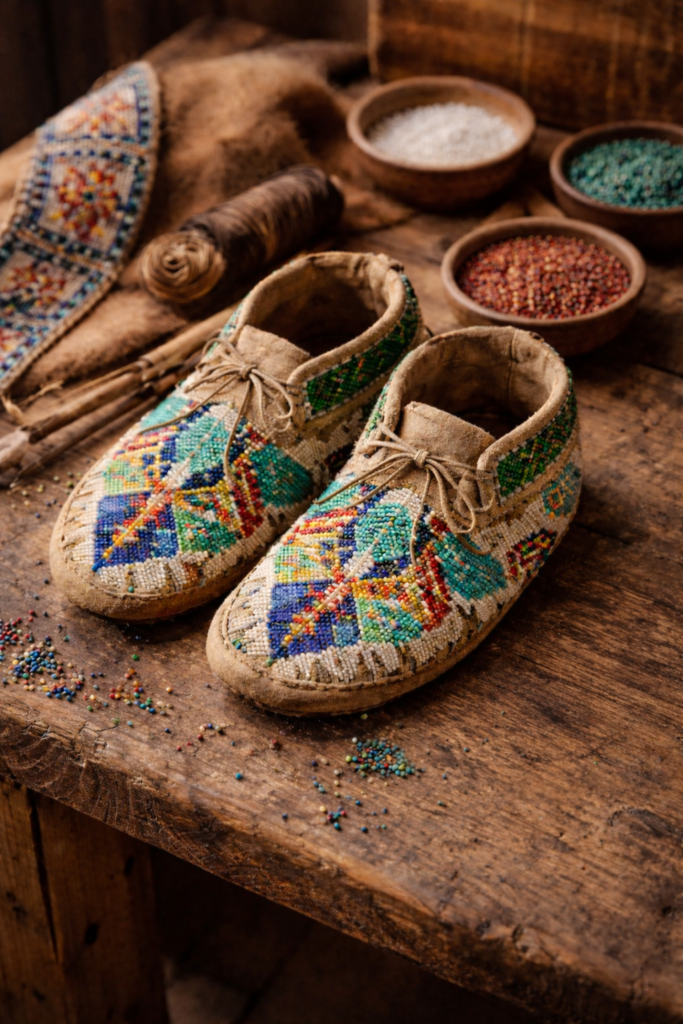
Over time, techniques evolved—from hand-drilled beads and simple stringing to intricate stitched patterns and loom-woven designs. Modern beading blends this deep history with contemporary materials, tools, and digital design methods.
What Can You Make With Beading?
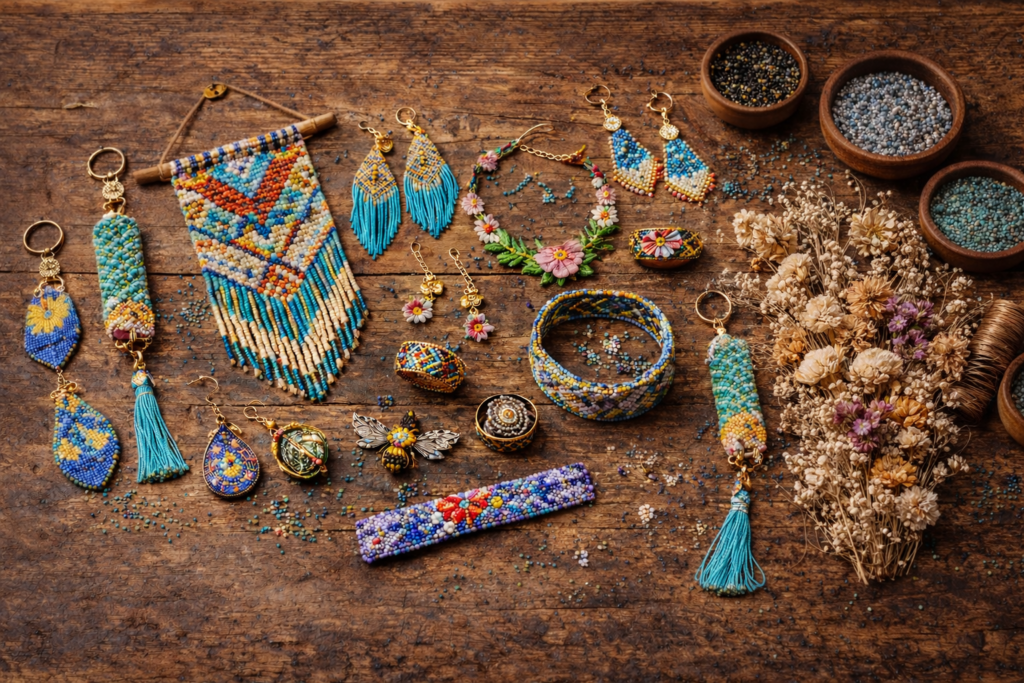
Beading is incredibly versatile, which is part of what makes it so appealing. With the same basic materials and techniques, you can create everything from simple everyday jewelry to detailed works of art.
Some of the most common beading projects include:
- Earrings – One of the most popular starting points, especially with brick stitch or fringe designs
- Necklaces – From delicate bead-woven chains to bold statement pieces
- Bracelets – Woven cuffs, wrap bracelets, or simple beaded strands
- Rings – Small bead-woven designs or bead-embroidered styles
- Brooches and pins – Decorative pieces often used for floral, animal, or symbolic designs
- Keychains and bag charms – Functional items that still allow for creative expression
- Decorative motifs – Standalone designs such as flowers, geometric shapes, or symbols
- Textile embellishments – Beads stitched onto clothing, accessories, or fabric panels
- Art pieces and wall hangings – Larger bead-woven or beaded-textile works created purely for display
Many people begin with jewelry because it’s wearable, practical, and satisfying to finish in a short amount of time. As skills grow, however, beading often expands into more artistic territory. Beads can be used to create texture, movement, color gradients, and even sculptural forms.
Whether your goal is to make something functional, decorative, or purely expressive, beading offers room to grow. The same foundational techniques can carry you from your very first pair of earrings all the way to complex, gallery-worthy designs.
Common Types of Beads
While there are many kinds of beads, beginners usually start with seed beads.
Seed beads are small, uniformly shaped beads most often made of glass. They come in many sizes, finishes, and colors, and they are the foundation of most bead weaving techniques.
Other bead types you may encounter:
- Cylinder beads (like Delicas)
- Faceted beads
- Crystal beads
- Stone beads
- Metal beads
Each type behaves a little differently depending on shape, size, and hole placement.
Popular Beading Techniques
Beading isn’t just about stringing beads on a thread. Many designs use structured stitches that create fabric-like results.
Some common techniques include:
- Brick stitch – Often used for earrings and geometric designs
- Peyote stitch – Flexible and versatile, great for patterns
- Ladder stitch – A foundational stitch used to start many projects
- Loom beading – Beads are woven on a loom for even rows
- Stringing – Beads are simply strung on wire or thread
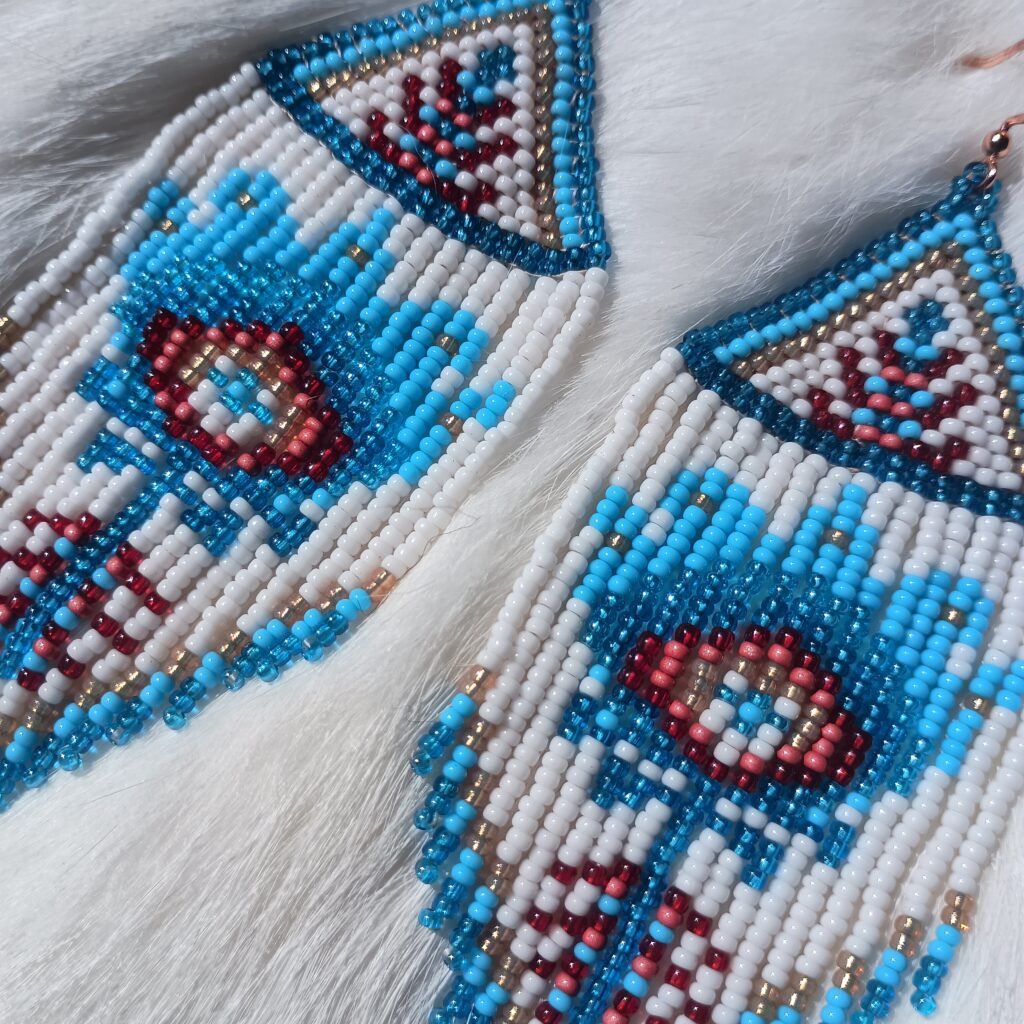
Each technique has its own strengths, look, and learning curve. When I create earrings, I use a combination of ladder stitch and brick stitch.
Basic Tools You’ll Need to Start
One of the most appealing things about beading is how little you need to get started. You don’t need a large workspace or expensive equipment—just a few simple tools will carry you a long way.
Most beginners can start comfortably with the following essentials:
- Seed beads
Seed beads are the foundation of most bead weaving projects. An 11/0 seed bead is a very common starting size because it’s easy to handle and widely used in patterns. - Beading thread
Beading thread is strong, flexible, and designed to pass through beads multiple times. It’s different from regular sewing thread and helps your work hold its shape. - Beading needles
These needles are long, thin, and flexible, allowing them to pass through small bead holes. Having a few on hand is helpful, as they can bend or wear out over time. - Scissors or thread snips
Small, sharp scissors make it easier to trim thread cleanly and close to your work. - Ear hooks or findings (if making jewelry)
Findings include ear hooks, jump rings, clasps, and other hardware that turn beadwork into wearable pieces. - Beading tray or bead mat
A beading tray or soft felt-lined surface helps keep beads from rolling away while you work. The slight texture gives you more control when picking up beads and makes it easier to sort colors as you design. Ryan made mine for me, but before that I just used a thrift store tray with felt.
A Personal Note
When I first started beading at 12 years old, I didn’t have a beading tray, bead mats, or any kind of organized setup. I kept all my beads in old camera film containers, all stored inside a Lucky’s Bakery box. I beaded straight out of that box—opening containers, pouring beads into my hand, and picking them up one by one.
There was no felt tray to keep beads from rolling, no designated workspace, and certainly no special tools. And yet, I was completely hooked.
That early experience taught me something important: beading isn’t about having the perfect setup. It’s about curiosity, creativity, and making do with what you have. Tools can make things easier and more comfortable, but they aren’t what make you a beader.
If you’re just starting out and don’t have everything on a recommended tools list yet, that’s okay. You can begin exactly where you are.
Helpful Extras as You Grow
As your skills develop, you may find a few additional tools useful:
- Specialty needles for different bead sizes
- Thread conditioners to reduce tangling and fraying
- Extra bead mats or trays for sorting colors
- Storage containers for organizing beads
- Digital design tools for planning patterns and color layouts, such as Beadessa, which allow you to experiment with shapes, colors, and bead placement before you ever pick up a needle
None of these are required at the beginning, but they can make the process more comfortable and enjoyable over time.pecialty needles, thread conditioners, bead mats, or digital design tools—but the basics go a long way.
Is Beading Hard to Learn?
Beading is very beginner-friendly. Many stitches repeat the same simple motions, and projects can be scaled to your comfort level. What makes beading especially appealing is that progress is visible quickly—you see your work take shape bead by bead.
Like any craft, patience improves results, but perfection is not required to enjoy the process.
Why People Love Beading
People are drawn to beading for many reasons:
- It’s relaxing and meditative
- It encourages creativity and color exploration
- It’s portable and can be done almost anywhere
- It produces functional, wearable art
- It connects modern makers to ancient traditions
For some, beading becomes a hobby. For others, it becomes a business or a lifelong art form.
Where to Go From Here
If you’re new to beading, the next steps are usually:
- Learning bead sizes
- Understanding basic stitches
- Reading bead patterns
- Experimenting with color and design
In future posts, we’ll break each of these topics down with clear explanations and real examples—so you can bead with confidence, not confusion.
Welcome to the world of beading. We’re glad you’re here.