
Seed Beads vs Delicas, What’s the Difference?
What’s the Difference, and Does It Matter? At some point in beading, almost everyone hears this question. Sometimes it’s asked gently, sometimes with frustration.
What’s the difference between seed beads and Delicas, and does it actually matter? The short answer is yes, there is a difference. And no, you don’t need to worry about it right away. This is one of those topics that sounds more complicated than it is. Once you understand how each bead behaves, the conversation becomes much simpler.
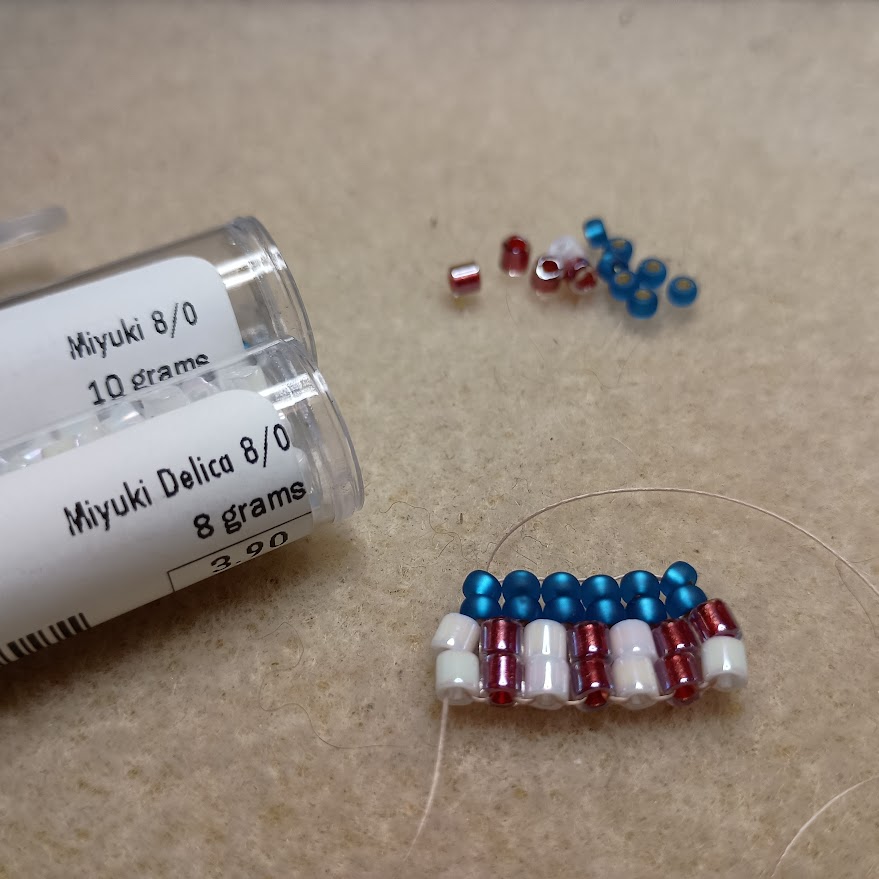
What Traditional Seed Beads Are Like
Traditional seed beads are slightly rounded, with gently curved sides. Even within a high-quality brand, they have small variations that give them a more organic feel.
When stitched together, seed beads tend to:
- have a softer drape
- allow a little movement in the work
- feel more flexible in fringe and earrings
- hide tiny tension inconsistencies
This is why many people find seed beads forgiving, especially when learning. They work well in brick stitch, peyote stitch, fringe, loom work, and bead embroidery, and they adapt easily to different styles.
Seed beads don’t try to force perfect geometry. They settle into place.
What Delica Beads Are Like
Delicas are cylinder beads. Instead of being rounded, they have straight sides and very uniform dimensions.
When stitched together, Delicas tend to:
- line up very tightly
- create straight, grid-like patterns
- emphasize structure and alignment
- show inconsistencies more clearly
Because of this, Delicas are often chosen for designs that are highly geometric or pixel-based. Patterns made with Delicas tend to look crisp and precise, especially in flat peyote or loom work.
They are excellent beads, but they are less forgiving. Small changes in tension or bead variation are easier to see.
How Shape Affects Stitching
This is where the difference becomes noticeable in practice.
With seed beads, the rounded shape allows stitches to settle naturally. This can help prevent stiffness and makes fringe move more freely.
With Delicas, the straight sides lock together. This creates beautiful alignment, but it also means the bead-work can feel firmer and less flexible, especially if tension is tight.
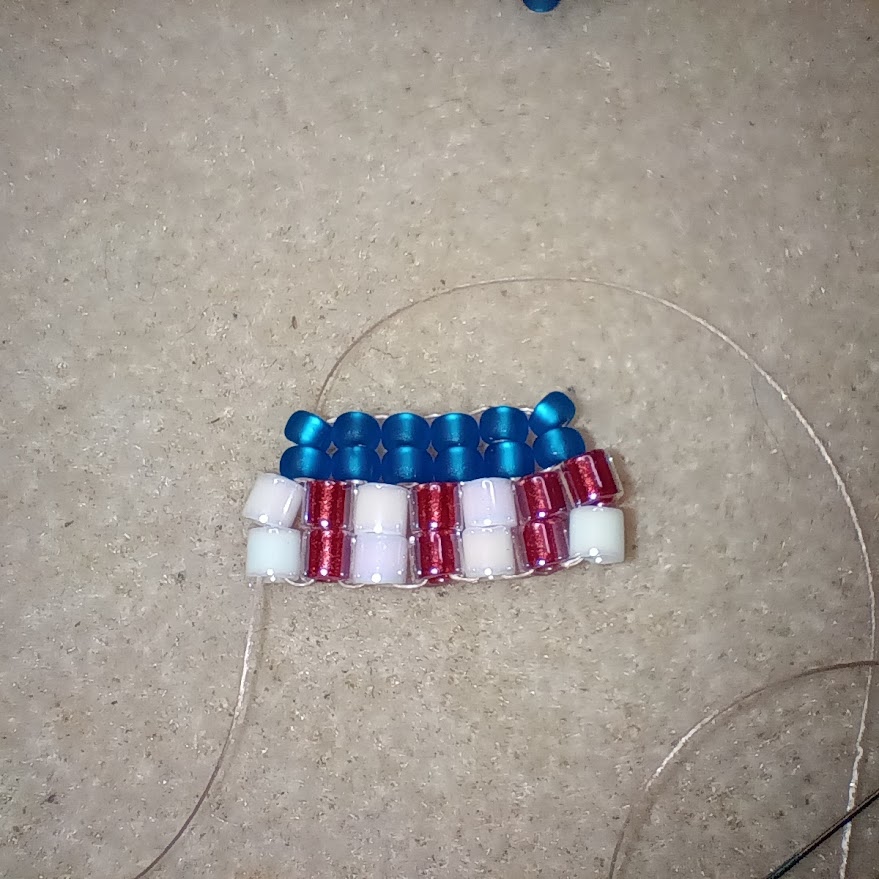
Neither is better. They simply behave differently. In the image below, these are all 8/0 size beads. The blue beads are the seed beads and the red and white are the delicas.
Why the Same Pattern Can Feel Different
You may notice that a pattern works beautifully with seed beads, then feels stiff or overly rigid when made with Delicas. Or the opposite, a pattern designed for Delicas may look slightly uneven when made with traditional seed beads.
This happens because patterns are influenced by bead shape, not just bead size. The spacing between stitches, the way beads stack, and how tension distributes across the work all change depending on the bead. This is normal, and it’s something most beaders learn through experience rather than instruction.
Which One Should Beginners Use?
If you are just starting out, you do not need to decide between seed beads and Delicas right away.
Many beginners find traditional seed beads easier to work with because they are forgiving and flexible. Others prefer Delicas because the uniform shape makes patterns easier to read visually. Both are valid starting points. What matters most is choosing beads that make learning feel approachable, not stressful.
You can always experiment later.
Why Many Beaders Use Both
Over time, many beaders end up using both seed beads and Delicas, sometimes even within the same piece. One may be chosen for structure, another for movement. One for precision, another for softness. They are tools, not teams. The more you bead, the more intuitive these choices become.
You Don’t Need to Decide Today
Seed beads and Delicas are not competing options. They are simply different shapes of glass that behave differently once stitched together. Understanding that difference helps explain why some projects feel smooth and cooperative, while others feel more rigid or exacting. There is no wrong choice. There is only what works best for the project in front of you.